
Auditory Mechanics


Background

  Next

    Menu


  Audilab home
 
  My history
 
  Modelling


Finite-element model of the moustached bat


  Biomedical Engineering


McGill
 

  Links


The human hearing system is one of the body's most fascinating sensory organs. It is capable of actively transforming acoustical signals into an electrical output; of determining minimal changes in stimulus intensity; and of an enormous amount of amplitude compression whereby the hearing system can distinguish incoming signals varying by several orders of magnitude, from a needle dropping on a table to an explosion.


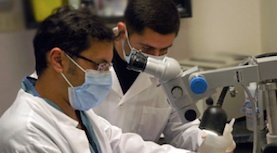
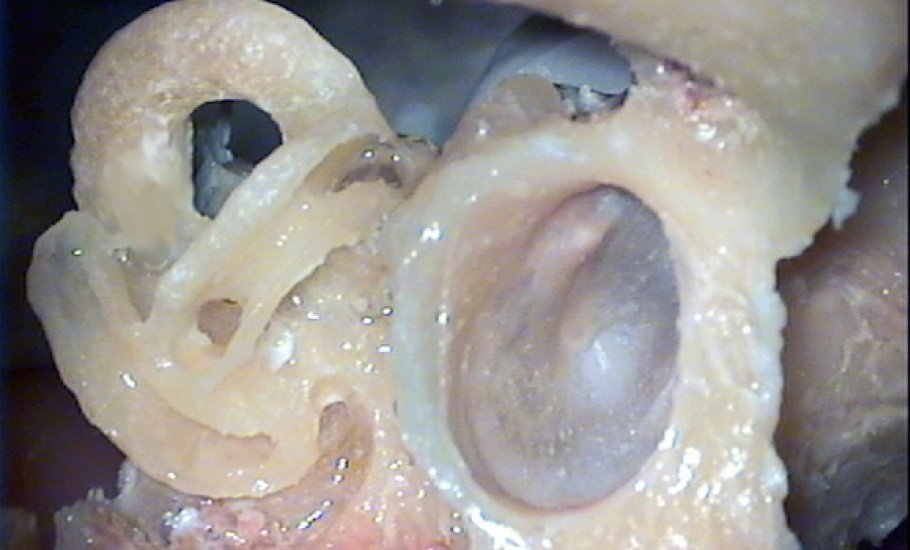
To get a better understanding of the mechanical behaviour and properties we develop models of the middle ear. The middle ears of both, humans and other mammals are used. It is common in hearing research that species other than humans are the subject of experimentation to develop and evaluate models for both normal and pathological aspects of the hearing system. Here at McGill models of cats, gerbils, bats and humans are being developed. The anatomy of terrestrial mammals is comparable to that of humans, and because experimental data needed for validation of the models is more readily available from non-human subjects we use also other species.

A 3D visualisation of the human middle ear.


A bit more about my background can be found here and for a visit to the audilab go to the Audilab website. Other labs arround the world can be found here.

Recently, I developed a model of the middle ear of the moustached bat. More about this can be found here.


© Copyright Rene G. van Wijhe 2000 Contact: Rene G. van Wijhe